Special Enough for Weddings and Christmas
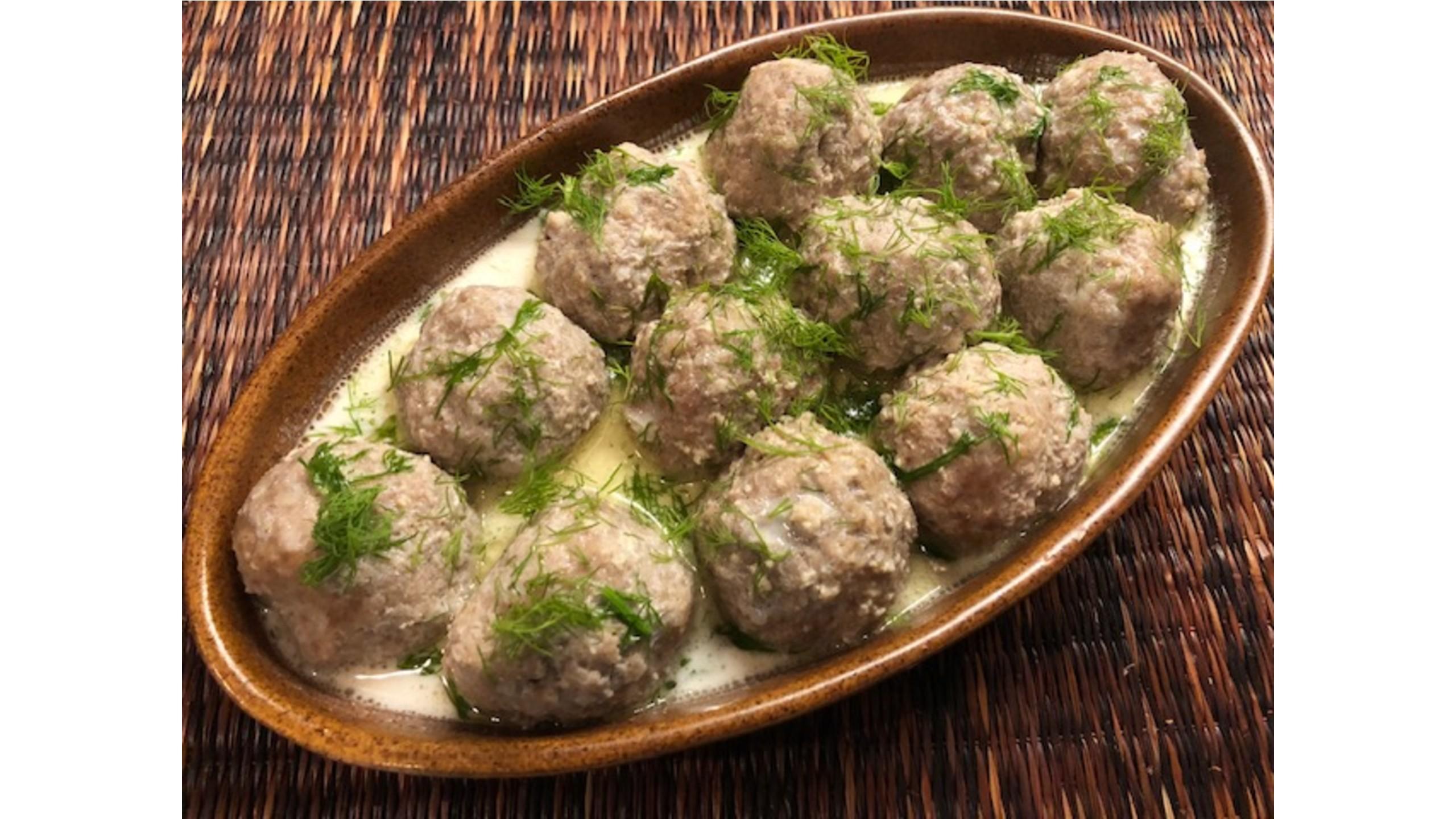
Though based on humble ground meat, Swedish meatballs are considered elegant by Swedes. “Köttbullar” (pronounced SHAWT-bool-ar, literally meaning meat balls) are tender, poached, meaty treats served on their own or in a cream and dill sauce. Typically, they’re accompanied by lingonberry sauce. The meatballs are so highly regarded as to be featured at wedding banquets and Christmas smorgasbords. Perhaps that esteem results from their royal heritage.
Chopping pieces of meat with a little grain or bread, or pounding them with a mortar and pestle, then seasoning and rolling the mixture into balls for cooking is a culinary technique that began in ancient Persia. In Imperial Rome, centuries later, the cookery book “De Re Coquinaria,” attributed to the Roman epicure Apicius, devoted the first chapter with actual recipes to “Sarcoptes,” meaning chopped meat. It includes rolled balls, or “rissoles,” of various meats and seafoods. Meatball cooking as an art form probably reached its zenith centuries ago in the palaces and kitchens of the Ottoman Empire. There are said to be over 290 individually named meatball specialties in Turkish cuisine today, most containing lamb. The Turkish word for meatball, “köfte,” comes from the classical Persian “kōfta,” meaning pounded (meat).
Meatballs appeared in Sweden in the first quarter of the 18th century and quickly became fashionable, especially among the aristocracy. It was the king himself who introduced them. Charles XII returned to Sweden in 1714 following five years of exile in the Ottoman Empire. In 1709 he had sought refuge there after he and his army were defeated by Peter the Great of Russia in what is now Ukraine. As a guest of the Ottoman Sultan, who was also at war with Russia, King Charles worked on rebuilding his military forces. He apparently loved Turkish cuisine, particularly “köfte,” their meatballs, and introduced them to Sweden upon his return. Similarly, he introduced other Turkish specialties, including stuffed cabbage leaves and coffee drinking,
While Swedish meatballs may have started as Turkish, their cream sauce with dill, and particularly their accompanying lingonberries, are very Swedish. Lingonberries, usually cooked into a sweetened sauce, are typical in Sweden with meats (including the grilled reindeer steak I once enjoyed at a restaurant there!), as well as on pancakes. The tiny red berries, produced on low-growing evergreen bushes, are native to the Arctic regions of Scandinavia, Russia and Siberia. They are close cousins of cranberries, which are native to the corresponding regions of North America. Lingonberry sauce is typically available at the Swedish-based department store IKEA.
Various meats, particularly beef and pork, and occasionally veal, are traditional in Swedish meatballs. (IKEA, which sells tons of frozen Swedish meatballs, makes theirs with pork plus beef.) Ground turkey, surprisingly, works well alone or in combination with another meat. I’ve been using just turkey for some time, and at our restaurant that’s the meat we use for this dish.
Although the meatballs can be served on their own for buffets and smorgasbords, cream sauce with dill is typical when the meatballs are part of a dinner. When in the sauce, they are often kept warm in a chafing dish.
The recipe serves six as a main course, accompanied by boiled or steamed potatoes, buttered noodles, or lightly salted rice. Peas are an attractive side dish. Serve with lingonberry sauce, or if that’s unavailable substitute whole-berry cranberry sauce. Wines frequently recommended to pair with Swedish meatballs include Pinot Noir and Chardonnay.
Swedish Meatballs in Cream and Dill Sauce
- 1/4 cup quick or old-fashioned oatmeal (not traditional, but works well)
- 1/2 cup unseasoned dry breadcrumbs
- 1 small-medium onion
- 1 small clove garlic
- 2 tablespoons oil or butter
- 2 eggs
- 2 teaspoons salt
- 1/2 teaspoon ground allspice
- 1/2 teaspoon finely grated lemon zest (or 1/4 teaspoon lemon extract)
- 3/8 teaspoon black pepper
- 3/8 teaspoon nutmeg
- 2 pounds ground turkey (the traditional is pork, beef, veal or a mixture)*
- 1 cup sour cream
- 2 tablespoons minced fresh dill (or 2 teaspoons dry dill weed) plus dill sprigs for garnish
In food processor, pulverize oatmeal (or chop it on cutting board with a chef’s knife). Place it in a mixing bowl. Measure crumbs and add to oatmeal. Cut onion into pieces and place in the food processor along with the garlic. Pulse and scrape down to mince finely. (Alternatively, mince onion and garlic finely with a chef’s knife on the cutting board.) Fry onion-garlic mixture in oil or butter, stirring frequently, until limp but not browned. Add this mixture to the bowl. Add the eggs and lightly beat them in with a fork. Add salt and seasonings and mix everything well. Add meat and combine thoroughly, kneading the mixture with your hands. If desired, chill the mixture for easier shaping.
Roll into 1 to 1-1/2-inch meatballs, depending on preference. (A small ice cream scoop helps make same-sized meatballs.) Wet hands occasionally so meat sticks less to them. Set meatballs on an oiled tray until needed. Heat a pot with water 2-1/2 inches deep. Add 1/2 teaspoon salt. When water boils, carefully add meatballs (half a batch at a time, if necessary, so as not to crowd them). Once the meatballs float, simmer them for 12 minutes, gently stirring from time to time. With slotted spoon, remove meatballs to a bowl to cool, covering top loosely with waxed paper. Boil the poaching water down, uncovered, to reduce to about 3 cups of broth. Meatballs and broth can be refrigerated (separately) or even frozen at this point.
To finish the creamed meatballs, skim any hardened fat off the broth. Heat together the meatballs and enough broth to come near the top of the meatballs, carefully stirring from time to time until lightly boiling. Gently stir in sour cream. Heat just until simmering. Taste sauce and add salt if desired. Add a little black pepper. Remove from heat and stir in the minced dill.
Serve in casserole bowl or chafing dish. A few sprigs of dill, freshly snipped, can be used to garnish.
*Note: If using ground pork, beef, and/or veal, add 2 tablespoons milk or water to meatball mixture at the same time as the eggs.