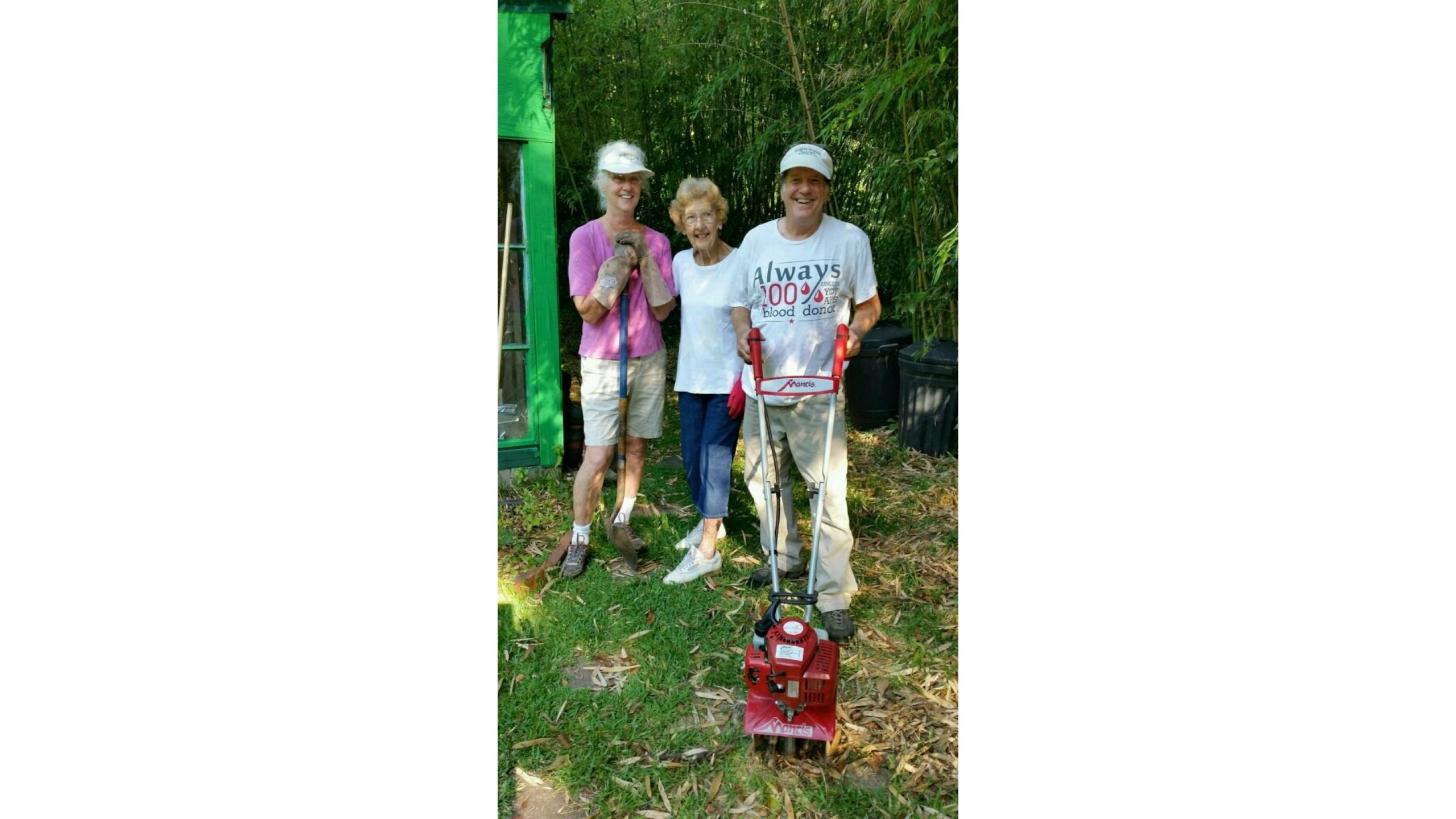
When we say, “It takes a village,” we’re not often talking about making our communities more livable for aging adults, especially those who live alone. But for the nearly 1 in 3 Americans aged 55 to 74 and half of those 75 and older who are aging on their own, redefining what constitutes a village may be necessary.
When we talk about making Athens more livable, we often focus on housing, public safety and infrastructure. But for thousands of older Athenians, the questions are more personal: Who will drive me to the doctor when I stop driving? Who will I call when I need to climb a ladder to change a lightbulb?
A growing national movement known as the village model offers one answer. Villages are organizations “to help enable older adults to live independently in their homes and in their communities,” says Barbara Sullivan, executive director of the Village-to-Village Network.
First implemented 25 years ago in the Beacon Hill neighborhood of Boston, the village model coordinates volunteer-powered support to help older adults with rides, errands, home maintenance, tech support, organized social activities and companionship. Villages recruit and train local volunteers, then match them with older adults who need support.
Today there are about 285 villages operating nationwide and roughly 40 more in development. One strength of the model is its flexibility: Some are standalone nonprofit organizations, while others partner with established organizations like senior centers or faith communities for administrative support. Villages rely on donations, grants and membership dues.
How the Village model works in the Auburn-Opelika community
In the Auburn/Opelika, Alabama community, Village Friends offers a compelling model for how one village operates in a Southern college town. Launched out of an Osher Lifelong Learning Institute (OLLI) class and now operating as a nonprofit, Village Friends provides structured volunteer coordination with the feel of a close-knit small town.
Board of Directors President Camille Wright first heard about Village Friends at a women’s club meeting, shortly after retiring from a demanding career as a school superintendent. Suddenly freed from 60-hour work weeks, she was looking for a way to put her organizing skills to use. At the same time, her 84-year-old mother had stopped driving and hated “bothering” family just to get out of the house. When Wright learned about Village Friends, she recognized both a solution for her mother and a new calling for herself.
Village Friends currently serves about 65 members with the help of 91 volunteers. Members live independently and are ambulatory but may no longer feel safe driving, climbing ladders or downloading a new app. Members call a village administrator who responds to requests for services by emailing volunteers who then sign up for whichever tasks they can cover. Transportation accounts for around 90% of the volunteer hours they formally track, but Wright emphasizes that the organization’s real mission is reducing social isolation.
“Social isolation is a huge detriment for seniors, and so getting people out, getting them connected, helping them make friends, keeping them involved. You know, that’s really what we want,” Wright says.
Wright cites research from the U.S. Surgeon General that shows social isolation can be as medically harmful as smoking 15 cigarettes a day. To that end, Village Friends organizes regular lunch gatherings, workshops and seminars.
When Wright first began volunteering with Village Friends, she drove a member who seemed “grumpy.” Making small talk, Wright mentioned her own interest in early childhood brain development—only to discover that her passenger was an internationally recognized neuroscientist in that very field. It was a “chill bump moment” for Wright.
“It’s just so sad to me to see somebody like that go to her house and take all that beautiful knowledge with her,” Wright says. “So I just love having the opportunity for people to spread their knowledge.”
Why Athens Is a Good Fit
Peter Balsamo, a retired continuing education administrator who founded the Men’s Roundtable at OLLI@UGA, says Athens already has the ingredients a village needs to succeed: a strong senior center in the Athens Community Council on Aging, UGA’s gerontology department, OLLI, a large network of nonprofits and faith communities, and a volunteer spirit.
Balsamo has been interested in the village model for years, but now he’s actively exploring how Athens might launch one. He sees the benefit in a vetted list of service providers and likes the idea of neighbors–primarily retired–helping older neighbors.
“I’m getting older and aging in place. I don’t see myself driving in the next few years,” he says. “I need handyman support because I’m terrified of being on a ladder.”
Both Balsamo and Sullivan acknowledge that any serious conversation about a village in Athens should address poverty. Many villages charge modest dues, often around $40 a month, and nearly all maintain scholarship programs.
Balsamo has organized an informational roundtable at OLLI on October 1, to introduce the village concept to the Athens community. It will be an opportunity to discuss what local older adults want and need, hear about the Friends Village at Auburn and identify a leadership group interested in exploring the model for Athens.
The event “Thriving in Place: Could the Village Model work in Athens” will take place on Thursday, Oct. 1, 10-11:15 a.m. Boom Athens will provide a follow-up in the FYI column in the Winter issue.
Ramsey Nix is a freelance writer living in Athens.